Wednesday, May 14, 2014

Industria musical (Wikipedia)


La industria musical es la conformada por las empresas e individuos que ganan dinero creando, divulgando y vendiendo música.

Entre los múltiples profesionales y organizaciones que operan en la industria de la música están:
y muchos otros.

https://es.wikipedia.org/wiki/George_Martin
https://es.wikipedia.org/https://es.wikipedia.org/wiki/George_Martinwiki/Industria_musical

Tuesday, May 13, 2014

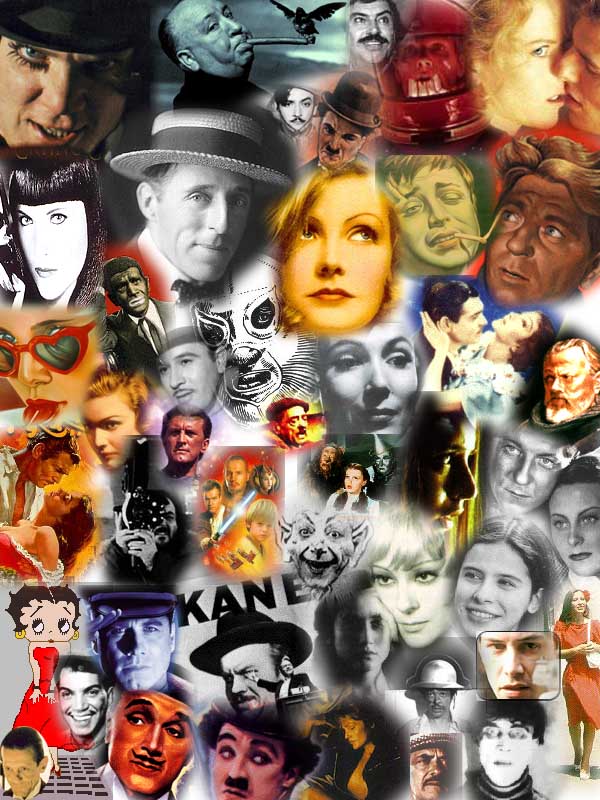
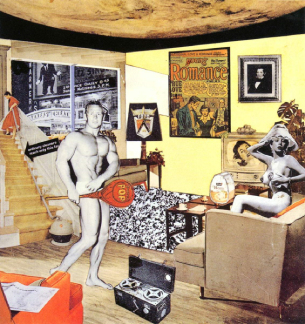
Collage (Wikipedia)


Collage (From the French: coller, to glue, French pronunciation: ​[kɔ.laːʒ]) is a technique of an art production, primarily used in the visual arts, where the artwork is made from an assemblage of different forms, thus creating a new whole.

A collage may sometimes include magazine and newspaper clippings, ribbons, paint, bits of colored or handmade papers, portions of other artwork or texts, photographs and other found objects, glued to a piece of paper or canvas. The origins of collage can be traced back hundreds of years, but this technique made a dramatic reappearance in the early 20th century as an art form of novelty.

The term collage derives from the French "coller".[1] This term was coined by both Georges Braque and Pablo Picasso in the beginning of the 20th century when collage became a distinctive part of modern art.[2]


Galería


Photomontage (Wikipedia)


Photomontage is the process and the result of making a composite photograph by cutting and joining two or more photographs into an illusion of an unreal subject. Sometimes the resulting composite image is photographed so that a final image may appear as a seamless photographic print. A similar method, although one that does not use film, is realized today through image-editing software. This latter technique is referred to by professionals as "compositing", and in casual usage is often called, "photoshopping", due to a particular software often used.[1] A composite of related photographs to extend a view of a single scene or subject would not be labeled as a montage.


Galery


Monday, May 12, 2014

Photo-essay (Wikipedia)


A photo-essay (or photographic essay) is a set or series of photographs that are intended to tell a story or evoke a series of emotions in the viewer. A photo essay will often show pictures in deep emotional stages. Photo essays range from purely photographic works to photographs with captions or small notes to full text essays with a few or many accompanying photographs. Photo essays can be sequential in nature, intended to be viewed in a particular order, or they may consist of non-ordered photographs which may be viewed all at once or in an order chosen by the viewer.[citation needed] People who have undertaken photo essays include Bruce Davidson, W. Eugene Smith, Walker Evans, James Agee, David Alan Harvey, and André Kertész.[original research?]

"After School Play Interrupted by the Catch and Release of a Stingray" is a simple time-sequence photo essay
  • An article in a publication, sometimes a full page or a two-page spread. Newspapers and news magazines often have multi-page photo essays about significant events, both good and bad, such as a sports championship or a national disaster.
  • A book or other complete publication.
  • A web page or portion of a web site.
  • A single montage or collage of photographic images, with text or other additions, intended to be viewed both as a whole and as individual photographs. Such a work may also fall in the category of mixed media.
  • An art show which is staged at a particular time and location. Some such shows also fall in the category of installation art.
  • A slide show or similar presentation, possibly with spoken text, which could be delivered on slides, on DVD, or on a web site.
  • In fashion publishing especially, a photo-editorial – an editorial-style article dominated by or entirely consisting of a series of thematic photographs

As an educational tool, Essay (Wikipedia)


In countries like the United States, essays have become a major part of a formal education in the form of free response questions. Secondary students in these countries are taught structured essay formats to improve their writing skills, and essays are often used by universities in these countries in selecting applicants (see admissions essay). In both secondary and tertiary education, essays are used to judge the mastery and comprehension of material. Students are asked to explain, comment on, or assess a topic of study in the form of an essay. During some courses, university students will often be required to complete one or more essays that are prepared over several weeks or months. In addition, in fields such as the humanities and social sciences,[citation needed] mid-term and end of term examinations often require students to write a short essay in two or three hours.

In these countries, so-called academic essays, which may also be called "papers", are usually more formal than literary ones.[citation needed] They may still allow the presentation of the writer's own views, but this is done in a logical and factual manner, with the use of the first person often discouraged. Longer academic essays (often with a word limit of between 2,000 and 5,000 words)[citation needed] are often more discursive. They sometimes begin with a short summary analysis of what has previously been written on a topic, which is often called a literature review.[citation needed]

Longer essays may also contain an introductory page in which words and phrases from the title are tightly defined. Most academic institutions[citation needed] will require that all substantial facts, quotations, and other porting material used in an essay be referenced in a bibliography or works cited page at the end of the text. This scholarly convention allows others (whether teachers or fellow scholars) to understand the basis of the facts and quotations used to support the essay's argument, and thereby help to evaluate to what extent the argument is supported by evidence, and to evaluate the quality of that evidence. The academic essay tests the student's ability to present their thoughts in an organized way and is designed to test their intellectual capabilities.

One essay guide of a US university makes the distinction between research papers and discussion papers. The guide states that a "research paper is intended to uncover a wide variety of sources on a given topic". As such, research papers "tend to be longer and more inclusive in their scope and with the amount of information they deal with." While discussion papers "also include research, ...they tend to be shorter and more selective in their approach...and more analytical and critical". Whereas a research paper would typically quote "a wide variety of sources", a discussion paper aims to integrate the material in a broader fashion.[5]

One of the challenges facing US universities is that in some cases, students may submit essays which have been purchased from an essay mill (or "paper mill") as their own work. An "essay mill" is a ghostwriting service that sells pre-written essays to university and college students. Since plagiarism is a form of academic dishonesty or academic fraud, universities and colleges may investigate papers suspected to be from an essay mill by using Internet plagiarism detection software, which compares essays against a database of known mill essays and by orally testing students on the contents of their papers


Related Posts Plugin for WordPress, Blogger...